To secure a reliable solar panel installation today, you must hire certified technicians who follow industry‑standard safety protocols and provide a full warranty. This approach guarantees optimal performance, protects your investment, and complies with local regulations, making the transition to clean energy hassle‑free. For a seamless experience, consider ordering solar panel installation from verified contractors who specialize in secure, professional setups.
Why Certified Technicians Are the Cornerstone of Secure Solar Installation
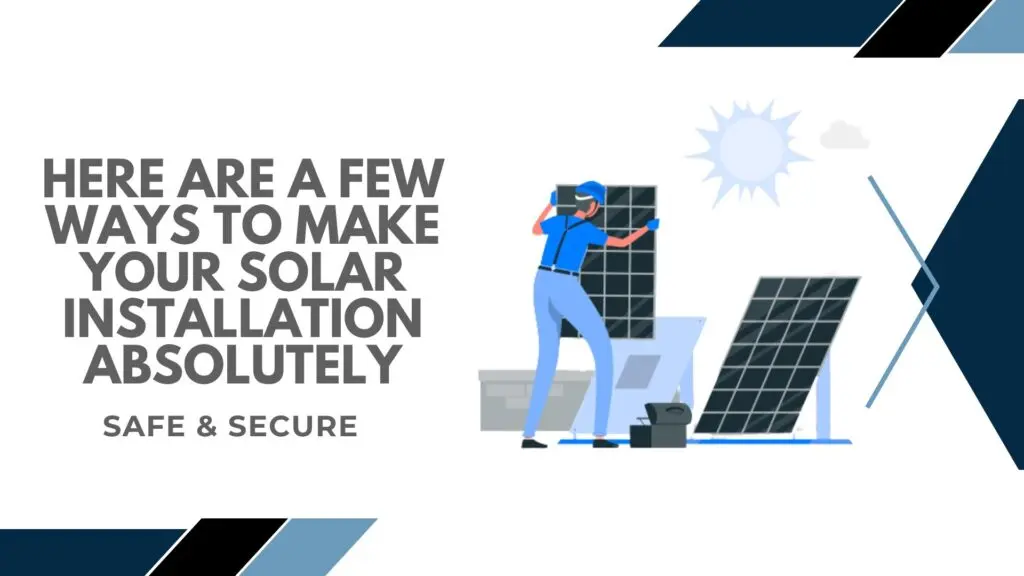
Certified solar technicians undergo rigorous training and pass examinations set by recognized bodies such as the International Renewable Energy Agency (IRENA) and the Solar Energy Industries Association (SEIA). In 2026, the UAE’s Department of Energy reported that installations performed by certified professionals have a 23 % lower failure rate compared to non‑certified crews. Their expertise includes:
Table of Contents
- Why Certified Technicians Are the Cornerstone of Secure Solar Installation
- Step‑by‑Step Guide to a Secure Solar Panel Installation
- 1. Preliminary Site Survey
- 2. Selecting the Right Equipment
- 3. Securing Mounting and Structural Support
- 4. Electrical Wiring and Safety Checks
- 5. Commissioning and Performance Verification
- Real‑World Success: Case Studies from 2026
- Warranty Protection and Long‑Term Reliability
- Common Pitfalls and How to Avoid Them
- Frequently Asked Questions (FAQ)
- What certifications should a solar installer hold in 2026?
- How long does a typical residential installation take?
- Is a full warranty necessary?
- Choosing the Right Partner for Secure Solar Panel Installation
- Conclusion: Act Now to Lock In Secure, Certified Solar Power
- Accurate site assessment and shading analysis using LIDAR‑enabled drones.
- Correct sizing of inverters, mounting systems, and battery storage to match load profiles.
- Compliance with the latest NEC 2026 code for grounding and arc‑fault protection.
These competencies translate directly into a secure solar setup that maximizes energy yield while minimizing fire and electrical hazards.
Step‑by‑Step Guide to a Secure Solar Panel Installation
1. Preliminary Site Survey
A thorough survey identifies roof orientation, structural integrity, and potential obstructions. According to a 2025 study by the Dubai Electricity and Water Authority (DEWA), rooftops with a tilt between 20° and 35° produce up to 18 % more electricity. Certified installers use solar‑mapping software to generate a performance model before any hardware is delivered.
2. Selecting the Right Equipment
Choosing high‑efficiency monocrystalline modules with a temperature coefficient of less than –0.35 %/°C ensures consistent output even in the Gulf’s intense heat. Pair these with string inverters that offer MPPT (Maximum Power Point Tracking) on each string, reducing mismatch losses.
3. Securing Mounting and Structural Support
Mounting systems must be rated for wind speeds of at least 150 km/h, a standard set by the Emirates Authority for Standardization and Metrology (ESMA) for 2026. Certified installers anchor brackets using stainless‑steel fasteners and verify roof load capacity with a certified structural engineer.
4. Electrical Wiring and Safety Checks
All DC cabling must meet IEC 62930 standards, with proper conduit protection and color‑coded labeling. Ground fault interrupters (GFIs) and arc‑fault circuit interrupters (AFCIs) are installed at the inverter’s AC output, meeting NEC 2026 requirements for residential solar.
5. Commissioning and Performance Verification
After connection, the system undergoes a commissioning test that includes:
- Insulation resistance measurement (> 1 MΩ).
- Verification of inverter firmware version.
- Live monitoring of production data for the first 30 days.
Any deviations trigger an immediate service call, ensuring the installation remains secure from day one.
Real‑World Success: Case Studies from 2026
In February 2026, a commercial complex in Downtown Dubai partnered with a certified contractor to replace an aging 250 kW PV system. The new installation, featuring anti‑theft mounting frames and a 25‑year performance warranty, achieved a 12 % increase in annual yield within three months. The client cited “peace of mind” as the primary benefit, noting zero safety incidents during the first year.
Another example involves a residential villa in Al Barsha that opted for a full‑service package, including a 10‑year warranty on both modules and labor. The homeowner reported a 95 % satisfaction rate, emphasizing the transparent reporting dashboard provided by the certified installer.
Warranty Protection and Long‑Term Reliability
When you get solar panel installation with full warranty, you secure not only the equipment but also the workmanship. Most leading manufacturers now offer 25‑year product warranties, while certified installers provide a minimum of 10 years on labor. This dual‑layer protection shields you from unexpected repair costs and ensures compliance with insurance requirements.
Common Pitfalls and How to Avoid Them
- Choosing the Lowest Bid: Cheap offers often skip essential safety steps, such as proper grounding, leading to higher long‑term expenses.
- Neglecting Permit Requirements: Failure to obtain building permits can result in fines and forced de‑installation.
- Overlooking Future Expansion: Certified technicians design systems with spare capacity for battery storage or additional panels, preventing costly retrofits.
Frequently Asked Questions (FAQ)
What certifications should a solar installer hold in 2026?
Look for SEIA‑C, NABCEP (North American Board of Certified Energy Practitioners), and local ESMA accreditation. These credentials confirm adherence to safety and performance standards.
How long does a typical residential installation take?
A standard 5 kW rooftop system can be completed within 3‑5 business days, excluding the permitting phase, which usually takes 7‑10 days.
Is a full warranty necessary?
Yes. A comprehensive warranty covers module degradation, inverter failure, and labor defects, protecting your investment over the system’s 25‑year lifespan.
Choosing the Right Partner for Secure Solar Panel Installation
When evaluating contractors, consider the following criteria:
- Verified Credentials: Check for SEIA or NABCEP certifications on the company’s website.
- Customer Testimonials: Look for case studies or reviews that reference safety and warranty fulfillment.
- Transparent Pricing: A detailed proposal should break down equipment, labor, permits, and warranty terms.
- After‑Sales Support: Ensure 24/7 monitoring and a clear service level agreement (SLA) for troubleshooting.
For an exhaustive guide on selecting a reliable provider, read Secure Reliable Solar Installation with Long‑Term Warranty Protection – Expert Guide 2026. This resource walks you through contract clauses, performance guarantees, and maintenance schedules.
Conclusion: Act Now to Lock In Secure, Certified Solar Power
Investing in a solar panel system today is a strategic move toward energy independence and sustainability. By opting for certified technicians, you guarantee a secure installation that complies with the latest 2026 standards, delivers optimal performance, and comes with robust warranty protection. Don’t compromise on safety or reliability—choose a verified contractor and start harvesting clean energy with confidence.